
Give us a call M-F (6am-10pm CT), Sat-Sun (8am-7pm CT)

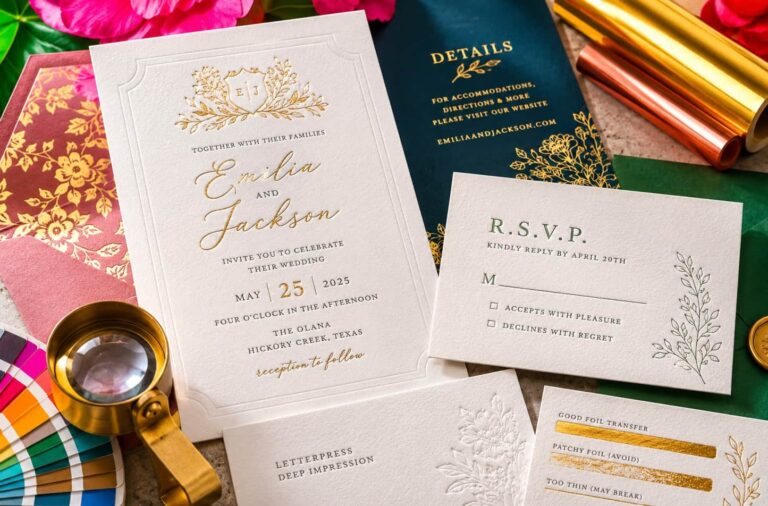
Mistakes with foil and letterpress printing can get expensive fast, especially for wedding stationery. Even small errors might mean reprinting invitations, RSVP cards, or save-the-dates. Since these methods use custom dies and special setups, fixing problems after printing starts usually leads to extra costs and delays.
Foil stamping can raise production costs by 20% to 50% compared to regular offset printing, depending on the design and materials. This is why it’s important for wedding stationery designers to know the most common production mistakes to get better print results and avoid expensive reprints. So, what are the usual printing errors to avoid?
A common mistake among wedding stationery designers is making artwork that looks great on screen but doesn’t print well.
Thin script fonts, very fine lines, and detailed flourishes can break apart during foil stamping or fill in when using letterpress. This often happens on RSVP and save-the-date cards, where designers try to include a lot of information in a small space.
Why It Happens
Foil stamping and letterpress use pressure, heat, and direct contact with the paper. Very thin details usually do not hold up well during production.
Most U.S. print shops suggest using lines that are at least 0.5 pt to 1 pt thick for foil work. Thinner lines are more likely to transfer poorly or break.
How to Avoid It
Make sure to review your files carefully before sending wedding invitations or RSVP cards to print.
A common and expensive mistake is choosing paper just for its appearance, without thinking about how it works with foil or letterpress printing.
Textured paper might look great in a mockup, but it can cause foil to stick unevenly during printing. Soft papers can also leave deeper marks than expected, which can blur fine details.
Why It Happens
Different printing methods respond in their own ways to various paper surfaces and thicknesses.
For example:
Problems with paper are a major reason for inconsistent results in specialty printing, especially if you don’t test the materials first.
How to Avoid It
Many designers think foil and letterpress printing will always line up perfectly. In practice, small shifts during production are common, even with well-tuned presses.
Problems often show up when layouts depend on very precise alignment.
Here are some common examples:
Why It Happens
Foil and letterpress use physical processes, so small changes can happen as sheets move through the press. Even tiny shifts can stand out on high-end wedding invitations, where clients want everything to look perfect.
How to Avoid It
Most printers suggest leaving a tolerance of 1 to 2 mm in areas where alignment matters.
You should also be open to layout changes before production if a small shift would make your design look wrong.
Starting production before confirming every detail is one of the quickest ways to face costly reprints.
Wedding stationery usually comes as a set, with items like invitations, RSVP cards, detail cards, and save-the-date cards. Just one wrong date, typo, or missing detail can impact the whole set.
Why This Happens
Many designers depend on quick email approvals or assume clients have checked every detail. In truth, most clients would pay more attention to the design than to the small details.
A Reddit thread about print and design industry shows that mistakes in client approvals are a top reason for reprints.
How to Prevent This
Many designers have a set process that everyone should follow to help catch any missed details.
Foil and letterpress are made by hand, so small differences are to be expected. Some stationery brands only show clients digital mockups and forget to mention that the final printed pieces can look a bit different. This sets expectations that all foil stamps and letterpress will all look the same.
What Designers Sometimes Miss
If you don’t set clear expectations, clients might think of these natural differences for mistakes and request unnecessary reprints.
How to Prevent This
Clients will appreciate the texture and character of foil and letterpress much more if they know how these methods work before you start.
There’s a temptation to use foil, letterpress, embossing, edge painting, and layered papers in one wedding invitation suite. These combinations can all look stunning, but they also make production more complex and increase the risk of mistakes.
Why It Happens
This usually happens when designers focus on creating a strong visual impact without considering the number of production steps required for each piece of stationery.
Every specialty finish needs its own setup, handling, and production step. Adding more finishes increases the risk of shifts, inconsistencies, or delays.
For example:
How to Avoid It
Many high-end wedding invitations look more refined because they use fewer finishes thoughtfully. Being selective often leads to cleaner, more reliable results.
Why are foil invitations more expensive to reprint?
Foil invitations need custom dies and extra setup time. If you have to reprint, you usually pay those setup costs again, so the total price goes up.
How can I make sure my RSVP cards print correctly with foil?
Choose easy-to-read font sizes, skip very delicate details, and test your paper before printing.
Is letterpress a good choice for save-the-date cards?
Yes, letterpress is a great option for high-quality save-the-date cards, especially if you use simple fonts and paper that shows the impression well.
What is the safest way to start offering foil wedding invitations?
Begin with simple designs, reliable paper, and basic foil methods before trying more advanced techniques.
Foil and letterpress can elevate wedding stationery, but they also require more careful production planning than standard printing methods. Many costly mistakes stem from overly detailed artwork, poor paper selection, alignment-sensitive layouts, or incomplete client approvals. By understanding how these print techniques behave in real production environments and using practical resources from PrintPlace during the planning process, designers can reduce reprints, protect their margins, and deliver a smoother experience for every wedding client.
PrintPlace’s mission is to provide customers with unparalleled printing services through the knowledge and expertise of its employees.