
Give us a call M-F (6am-10pm CT), Sat-Sun (8am-7pm CT)

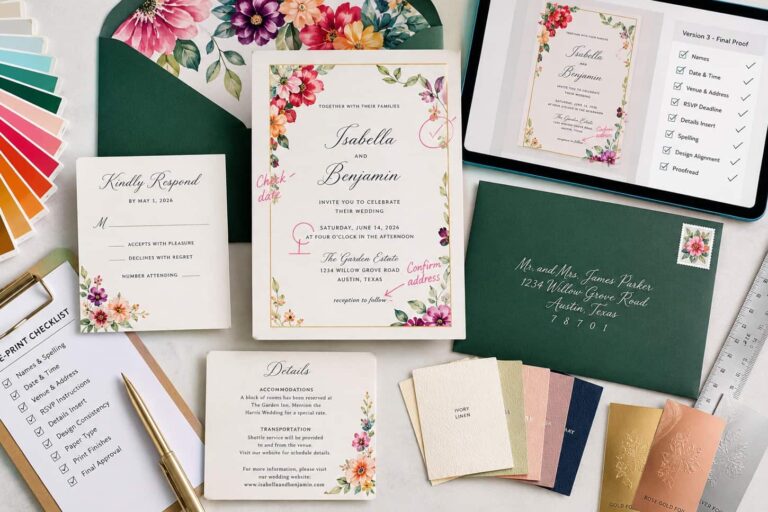
When working on wedding invitations, stationery printers often help clients make choices they have not faced before. Many couples focus on design and style, which sometimes means important details get missed until late in the process. Having a clear preprint review process can help avoid problems like delays, extra revisions, and expensive reprints. One study found that organized feedback reduced revision rounds from 5 to 6 down to just 2 to 3 per project. By checking key details before printing, printers can speed up approvals, cut down on back-and-forth, and make the whole experience easier for clients.
This guide will show you what to check before printing so you can save time, avoid extra steps, and give your clients a better experience.
Wedding stationery projects are often more complex than other print jobs, especially when you have several client deliverables to manage. You might be working with different materials, strict mailing deadlines, and details that must be correct.
When you lead clients through a clear review process for all wedding deliverables, it becomes easier for them to give accurate feedback. This reduces unnecessary back-and-forth and helps your projects stay on track.
This is your last chance to review everything before printing the wedding suite. Each section will help you walk your client through a specific part of the review process.

Begin by checking the details your guests will rely on, so even the most minor mistakes can be corrected.
Go through each detail with your clients one at a time instead of asking for a general review. Ask them to check every item separately.
Make sure to confirm the following:
To help with this step, send a short message asking them to check each line. This helps them focus on accuracy instead of just appearance.

An invitation suite is like a system. It should help guests move smoothly from opening the envelope to sending back their RSVP, without any confusion.
Rather than looking at each piece separately, show your client what a guest will experience when they receive the whole invitation suite.
Here are some important things to check together:
For example, even a well-designed RSVP card can cause problems if guests do not know how to reply or where to send it.
If you are including RSVP cards, take a moment to confirm that instructions, deadlines, and mailing are all clear and complete.
3. Check Readability and Information Hierarchy
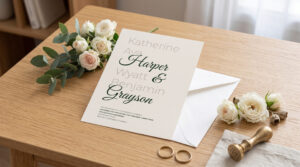
People often focus on how a design looks, but how easy it is to use is just as important. Most guests only glance at invitations, so the key details should be easy to spot right away.
One useful way to check this is to look at the design at its real size and see if the main details are clear within a few seconds.
Focus on a few important things:
It’s also helpful to talk about how the materials will affect the finished invitation. The texture and finish of the paper can change how colors and text look when printed. You can help clients by showing examples of paper and finish options for wedding invitations, so they see how design and production work together.
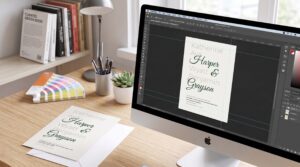
Clients often think the printed piece will look exactly like what they see on their screen. Setting clear expectations early helps prevent confusion down the line.
Take time to explain the basics of print production in simple language. This helps build trust and prepares clients for any small differences.
Key topics to cover include:
For specialty items like foil invitations, let clients know that small differences in alignment or texture can happen during production. Explaining this early helps avoid questions and concerns after delivery.

Having a clear approval step is one of the easiest ways to avoid confusion and extra rounds of changes.
Rather than getting informal approvals in separate messages, set up a single clear moment for the client to confirm that everything is ready.
You can make this easier by:
A simple message like the one below can really help:
“This is your final proof. Please review all details carefully. Once approved, this file will be sent to print exactly as shown.”

Revisions are a regular part of design work, but having too many can slow down your project and cut into profits. The aim isn’t to get rid of revisions, but to handle them more efficiently.
Frequently Asked Questions
What details are most commonly overlooked on wedding invitations?
People often forget to include the day of the week, RSVP instructions, venue details, or make spelling mistakes. These details are important for guests, so double-check everything before giving your final approval.
Is a physical proof necessary for every wedding invitation order?
You don’t need a physical proof for every order, but it’s a good idea if you’re using premium materials, special finishes, or a complicated design. Proofs let you check colors, textures, spacing, and print quality before printing everything.
How can stationery printers manage frequent client revisions more effectively?
Set clear limits on revisions at the start and ask clients to send their feedback all at once, if possible. A checklist can also help keep requests organized and cut down on repeated changes.
When should printers be involved in the wedding invitation planning process?
It’s best to involve your printer as early as you can, especially if you want foil stamping, embossing, custom sizes, or a large order. Early planning helps prevent technical or production problems down the line.
How many times should clients review their invitation proof before printing?
Review your invitation proof two or three times, and ask someone else to check it too if you can. Checking more than once helps catch mistakes before printing. Set a clear limit on reviews and approvals, and always agree on a final approval date to keep things on schedule.
What should be included in a final client approval before printing?
Before printing, make sure you’ve checked all the wording, names, dates, addresses, RSVP info, quantities, paper choices, and finishes. Getting written approval helps avoid any confusion or disagreements later.
Printing wedding invitations successfully takes more than just creative design. You also need a clear process so clients can review every detail confidently before printing starts. Doing pre-print checks helps catch mistakes, avoid delays, and prevent extra revisions or reprints. If you set up a consistent workflow and use reliable resources from UPrinting, you can make your projects more accurate, build client trust, and keep production running smoothly. This approach also helps your business deliver steady, reliable results over time.
PrintPlace’s mission is to provide customers with unparalleled printing services through the knowledge and expertise of its employees.