
Give us a call M-F (6am-10pm CT), Sat-Sun (8am-7pm CT)

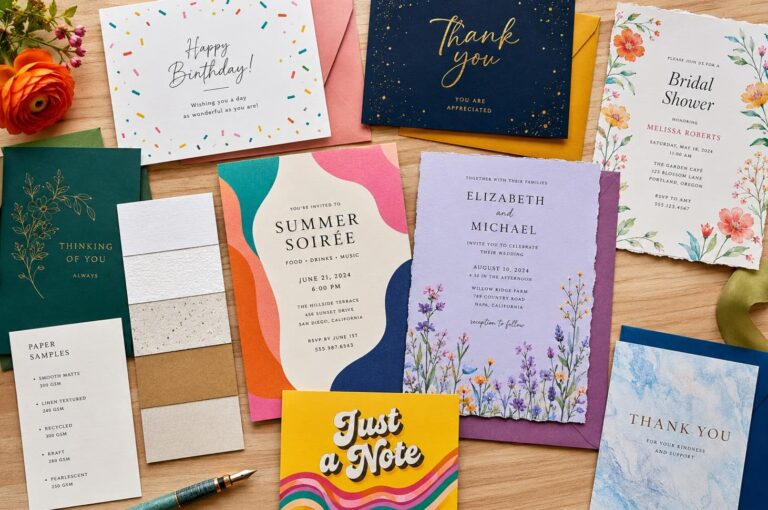
If you sell stationery on Etsy or Instagram, you know customers form an opinion as soon as they receive your product. Paper is more than a production detail. It affects how people see your brand, review your products, and decide if they’ll buy it again.
Customer feedback on stationery is often direct. Good reviews mention words like “thick,” “premium,” or “high-quality.” For many sellers, simply upgrading your paper can quickly improve how people respond to your products, even if you keep the same design.
This guide will help you pick the right paper for how your products are used. Rather than guessing about paper weights or finishes, you’ll learn how to choose paper that meets what customers expect for art prints, cards, invitations, stickers, and more.
Choosing the right paper does more than make your products look good. It also affects how well they work in real life and how customers feel about their purchase.
When your paper matches what customers expect, you’re likely to see:
Sellers who switch from lightweight to heavier card stock for greeting cards often see fewer quality complaints. While results can differ, using better materials is a reliable way to get more positive reviews in stationery.
Rather than just looking at technical specs, think first about how your customer will use the product.
Here’s an easy way to look at it:
| Product | How Customers Typically Use Them | Important Ideas During Printing Process |
|---|---|---|
| Art prints | Customers display art prints on walls, shelves, or office desks. | Most require accurate colors and surface finish improve the presentation and detail. |
| Greeting cards | Customers give cards during birthdays, holidays, and special celebrations. | Sturdy paper construction helps cards feel polished and more substantial. |
| Note cards | Customers frequently write handwritten messages, reminders, or personal notes. | Provide smooth writing surfaces that prevent ink smudging and improve pen performance. |
| Thank you cards | Businesses include these cards within orders to strengthen customer relationships. | Use consistent print quality that supports stronger branding and professionalism. |
| Invitations | Guests receive invitations for weddings, parties, and formal gatherings. | Premium materials and print finishes create a more elevated appearance. |
| Stickers | Customers apply stickers onto packaging, laptops, bottles, or notebooks. | Great balance between strong adhesive performance and durability across different surfaces and conditions. |
When you choose paper based on how it will be used, your decisions become clearer and more consistent.
When people buy art prints, they usually picture how the artwork will look on their wall. Things like lighting, texture, and finish all play a part in that impression.
Here are some options that often work well:
Things to watch out for:
A helpful way to decide is to print one design on two different finishes and see how each looks in natural and indoor light. Many sellers notice that customers like prints that look good in photos online and appear balanced in person.
Stationery cards are among the most tactile products in this category. Customers want them to feel sturdy and special enough to give to someone.
For greeting cards, note cards, and thank you cards, the type of paper you choose makes a difference in several ways:
Here are some practical tips:
For invitations, especially for weddings or formal events, the quality of the paper quickly shows its value. Even a simple design can stand out with the right paper.
People usually judge stickers by how well they last. Customers put them on laptops, water bottles, packaging, and planners. Buyers will be disappointed if a sticker doesn’t last longer.
Here are the main things that affect sticker quality:
These options usually work well:
One good way to test stickers is to try them out in real-life situations:
Making stickers more durable can reduce replacement requests and lead to better reviews. In many small product categories, even a slight drop in complaints can make a big difference in overall ratings.
Testing is important, but if it is not organized, it can quickly get expensive and take up a lot of time.
Rather than testing lots of paper types at the same time, try a more focused method:
This method helps you decide faster and keep costs down. It also lowers the chance of having inconsistent product listings that might confuse customers.
Consistency is one of the biggest drivers of repeat purchases in stationery. Customers who reorder expect the same quality every time.
To maintain consistency:
Even minor differences in paper can be noticeable to repeat customers. Maintaining consistency helps build trust and strengthen your brand identity.
How do I choose between different card paper weights?
Think about how the card feels in your hand. Heavier paper usually feels more high-end and works well for greeting cards and invitations. For note cards and thank you cards, try to find a balance between thickness and how easy it is to write on.
Is matte or glossy better for art prints?
Both options can look great, depending on your design. Matte paper works well for softer artwork, while glossy paper makes bright colors stand out. The best way to decide is to test your own designs.
Why do sticker quality issues affect reviews so quickly?
People use stickers every day, so they quickly notice problems like peeling or fading. Making your stickers more durable can help you get better reviews.
How can I reduce costs when testing paper?
Try testing just a few carefully chosen paper types and compare them side by side. This way, you waste less and can decide more quickly.
The right paper choice supports how your stationery looks and feels to customers. Whether displaying an art print, writing on a note card, or applying a sticker, the material shapes their experience with your brand. Focusing on real product use makes paper selection more practical and easier to manage as your business grows. For stationery sellers using platforms like PrintPlace, choosing materials that match customer expectations can lead to stronger reviews, repeat orders, and more consistent product quality.
PrintPlace’s mission is to provide customers with unparalleled printing services through the knowledge and expertise of its employees.