
Give us a call M-F (6am-10pm CT), Sat-Sun (8am-7pm CT)

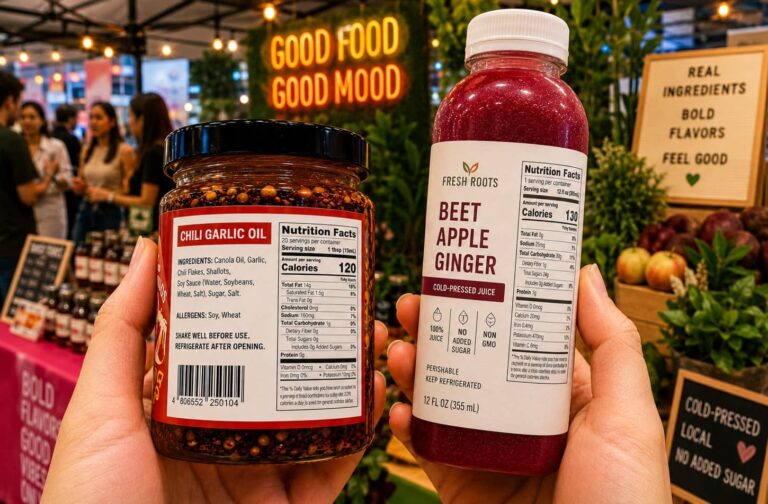
Picking the right food label materials helps your products hold up well in different packaging and storage situations. Labels for refrigerated meals, oily foods, frozen items, and packaging that gets wet each face their own challenges during handling, shipping, and display. Clear, durable labels make information easy to read, help you meet regulations, and show off your brand to customers.
In this article, we’ll look at some food label options you can use to make your packaging reliable and professional for real-world use.
| Product Type | Factors to consider | Recommended material | Advantages |
|---|---|---|---|
| Oily products (sauces, dressings, marinades) | Most oily food products are often exposed to grease, spills, and frequent handling during use. | BOPP labels with lamination are recommended for products exposed to oil and heavy handling. | The durable label material prevents staining and helps keep labels clean, maintaining clear readability over time. |
| Refrigerated items (cold brew, dairy, fresh foods) | Refrigerated products regularly deal with condensation, moisture buildup, and changing temperatures. | Waterproof BOPP materials are well-suited for refrigerated packaging. Pair them with a custom finish, specifically used for cold storage. | Waterproof BOPP materials prevent labels from peeling, lifting at the edges, or losing adhesion in cold storage conditions. |
| Moist or wet environments (beverages, deli items, ice storage) | Products stored around water, humidity, or ice need labels that can handle constant moisture. | Waterproof BOPP also works for moist environments. You can also use Vinyl or laminated BOPP materials. | The labels prevent ink smudging and fading, while the adhesive works even when constantly exposed to condensation. |
| Flexible packaging (pouches, squeezable containers) | Flexible containers bend and move during handling, transport, and standard use. | Flexible and durable materials such as BOPP or vinyl work well on packaging that changes shape. | Flexible label materials helps reduce bubbling, lifting, and other issues caused by movement and pressure. |
| Shelf-stable, dry products (spices, dry goods) | Dry products usually experience less moisture exposure and lighter handling compared to refrigerated or wet products. | Any label works for shelf-stable products. Paper labels or non-laminated materials are often chosen for affordability. | Paper stickers help keep packaging more cost-efficient while still maintaining a clean and professional appearance. |
Before you choose materials, take time to understand the environment where your product will be used. Doing this makes the next steps much easier.
Consider these factors:
A drink kept in the fridge will always have condensation, while a sauce container might get oily and be handled often. These situations affect how well a label lasts.
If you figure out these details early, you will save time and avoid guessing later on.
Sauces, marinades, and dressings often touch oil, which can affect how labels look and work over time. Spills and greasy hands can cause some labels to smudge, stain, or become hard to read faster than expected. Choosing materials designed for oily foods helps labels stay clear, strong, and professional during storage and everyday use.
Certain types of labels are better suited for oily foods:
Why is this important for your business?
If you are just starting out, be sure to check what information needs to go on your label.
Cold storage, condensation, humidity, and frequent handling can all impact how well food labels last. Bottled drinks, deli foods, dairy, fresh foods, and items kept on ice often face temperature changes and moisture during storage and use. Picking the right label materials keeps packaging clear, secure, and looking professional in these situations.
Consider these materials for products that need to withstand refrigeration or moisture:
Here are a few more tips:
How well a label works depends on the surface it sticks to. Even the best material may not perform well if it does not suit the packaging.
Here are some important things to keep in mind:
Here are some examples of good label and packaging matches:
Knowing how your packaging type affects label performance can help you avoid problems when applying and using labels. You can learn more about this in the next section.
After choosing the right material for your food packaging labels, pick a finish that will make them look better and last longer. The finish affects both how your packaging looks and how well it holds up.
Different finishes offer different benefits. Here’s what each one can do:
Gloss finish
Matte finish
No lamination
If your product is often touched or comes into contact with moisture, using a protective finish will help your label last longer.
When your production grows, the kind of labels you use becomes important for both packaging and efficiency. You can pick the label format that makes application easier and keeps your workflow smooth. Some formats are better for automated systems and large runs, while others work best for small batches and labeling by hand.
There are two common types of label formats to consider:
Improving your labeling process can save you time as your production grows. Labeling by hand takes a few seconds for each product, but automated systems work much faster. For larger batches, this time savings can boost your productivity and help your daily operations run more smoothly.
Picking the right label material keeps your packaging looking clear, strong, and consistent in everyday situations. If your products are exposed to oil, moisture, cold storage, or frequent handling, using materials designed for those conditions can help. When businesses choose practical label options, they often see better readability, improved packaging, and a better customer experience. With options from PrintPlace, brands can choose label materials that fit how their products are stored, handled, and displayed, so packaging works well from start to finish.
PrintPlace’s mission is to provide customers with unparalleled printing services through the knowledge and expertise of its employees.