
Give us a call M-F (6am-10pm CT), Sat-Sun (8am-7pm CT)

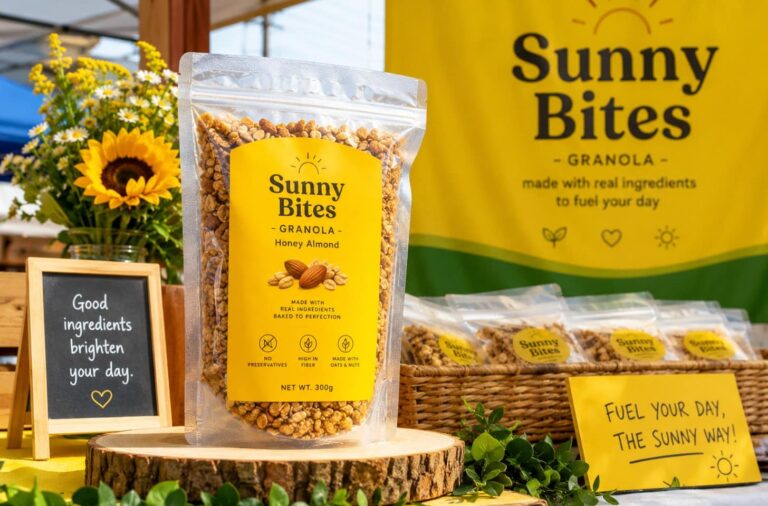
Customers want clear and trustworthy information before they decide to buy your product regularly. Food labels are a big part of that choice. The Acosta Group reports that 58% of U.S. shoppers read ingredient labels before buying, and FMI – The Food Industry Association says 76% value transparency when picking food products.
A good label does more than just meet the rules. It helps customers trust your product and helps establish your name. This guide will show you what to put on your food labels to help people make better buying decisions.
When a customer picks up your product, they make a quick decision. Most shoppers look at a product for only 0.3 to 1.5 seconds before moving on. This means your label must get the message across right away. People should know what your product is immediately.
In those brief moments, customers are asking themselves:
If your label answers these questions clearly, you make it easier for people to buy. If not, they may hesitate or move on.
Even small changes that make your label clearer can help. When people can easily understand your label, they make decisions faster and feel better about choosing your product.
Ensuring your food label meets all fundamental requirements is essential for most U.S. packaging and establishes your brand’s credibility.
1. Product Name
Choose a product name that clearly tells customers what your product is.
For example:
A clear name helps customers avoid confusion and simplifies their decision-making.
2. Net Quantity
This informs customers of the exact quantity and allows for easy comparison with other products. One great way to help buyers is to use commonly recognized measurements.
Examples:
Since customers often compare products quickly, this detail is more important than it may appear.
3. Ingredient List
List ingredients in descending order by quantity.
To make this easy to read and understand:
Transparency builds trust. Products with clear ingredient labels are often perceived as higher quality.
4. Allergen Information
Clearly list any major allergens, such as milk, eggs, wheat, soy, peanuts, tree nuts, fish, shellfish, and sesame.
Example: Contains: Milk, Soy
This helps customers make safe choices and reduces risk for your business.
5. Nutrition Facts Panel
Most products present ingredients, allergens, and nutrition information in these panels. Even if your business qualifies for an exemption, including this panel can build trust and prepare your product for retail.
Retail buyers typically require this panel before considering your product for their shelves.
6. Business Information
Include your business name and location.
At a minimum, provide the company name, city, and state where your operations are based. This assures customers your product comes from a legitimate and trustworthy business.
After you’ve covered the basics, focus on making your label feel complete for your customer.
Your label should answer common customer questions to make buying easier.
1. Provide a clear product description
A brief description helps customers quickly understand your product.
For example:
This reduces uncertainty and builds customer confidence.
2. Include usage suggestions
Customers are more likely to buy when they can picture how they’ll use your product.
You might add:
Including these details can make your product appear more versatile and valuable.
3. Give storage and freshness tips
Customers want to know how to store your product and how long it stays fresh.
Include clear instructions such as:
Clear instructions reduce uncertainty and help customers feel confident purchasing.
4. Include meaningful trust signals
Include clear and accurate claims that reinforce product quality.
For example:
These signals are important because they reflect current customer preferences. Nielsen reports that clean-label products are outperforming others, with an 8% increase, as more consumers seek simpler ingredients and less processing.
When your label clearly shows these qualities, customers feel more confident choosing your product.
Your product label should be easy for customers to understand at a glance. A simple layout lets people find key details quickly, without sorting through too much information.
1. Split Information Using Front and Back Labels
Brands usually organize content by what’s most visual and what is essential. Using front and back labels ensures your packaging looks cleaner and more professional.
Put the product name, a brief description, and the net quantity on the front of the package. Place other details like ingredients, nutrition facts, allergen warnings, storage instructions, and business information on the back or sides so they’re easy to find when needed.
2. Making Sure Your Label Works with Your Packaging
Make sure your label design fits the shape and how people handle your packaging. Ensure that what looks good on a screen also works on jars, pouches, bottles, and other curved surfaces used for food products.
Each type of packaging needs its own label layout to stay readable. For example:
3. Choosing Label Materials That Perform in Real Conditions
Food packaging often comes into contact with moisture, oil, cold, and temperature changes. If a label peels, smudges, or fades, customers might doubt the product’s quality, even if the food itself is still good.
Choosing strong label materials keeps your packaging looking clean and professional during storage and handling. Before picking materials, think about whether your product will face condensation, refrigeration, or oily surfaces, since these can affect how well the label sticks and lasts.
After you finish your label design, check if it’s easy to read, ask others for feedback, and think about how you might update it in the future. These steps can help you avoid extra work, get better customer reactions, and make it easier to grow your product.
1. Test Your Label with Real People
Ask someone who doesn’t know your product to look at your label. Find out what they think it is, if they would buy it, and what they find confusing. Feedback from others can quickly show you what needs to be clearer.
2. Start with a Small Print Run
Start by printing a small batch instead of ordering a lot right away. Try selling your food products using these labels to see how they work. Gather feedback and fix any problems before making more.
3. Focus on Readability
Make sure customers can understand your label in just a few seconds. Use fonts that are easy to read, good contrast, and even spacing so the important details stand out, even on busy store shelves.
4. Plan for Future Growth
Leave some space on your label for things you might need later, like barcodes, batch numbers, prices, or new product details.
Do I need a Nutrition Facts panel if I am a small business?
Some small businesses do not need a Nutrition Facts panel, but many retailers still want to see one. Adding it can help your business look more credible and make it easier to get your product on store shelves.
What makes a food label effective?
A good label is clear and complete. If customers can quickly understand your product, they are more likely to buy it.
Can improving my label really increase sales?
Yes. Clear labels help customers feel confident about buying. Even small changes in how you share information can boost sales, especially if you are competing with similar products.
How do I know if my label needs improvement?
Listen to the questions your customers ask. If you hear the same questions often, your label might be missing important details.
Your food label is a key tool when you launch a product. If it is clear, complete, and easy to read, it builds trust, makes customers feel comfortable, and helps them make decisions more quickly.
For new food brands, this can lead to better sales and easier store placement. The best advice for designing food labels is to ensure your layout and print reflect how you want your brand to be seen. When customers feel sure about what they are buying, they will come back for more. Let PrintPlace be your partner in printing labels and packaging that proudly represent your brand.
PrintPlace’s mission is to provide customers with unparalleled printing services through the knowledge and expertise of its employees.