
Give us a call M-F (6am-10pm CT), Sat-Sun (8am-7pm CT)

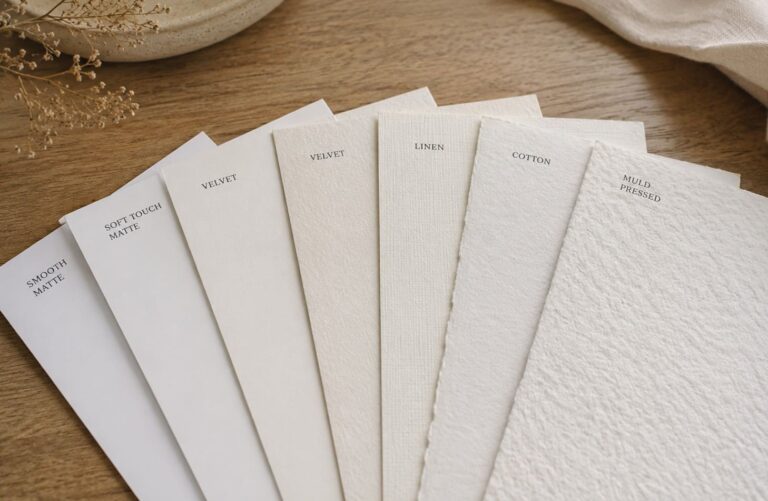
The choice of paper and finishes can make or break a wedding invitation design. Even if a layout looks perfect on screen, the final outcome depends a lot on the materials you use.
A study from The Knot found that couples spend around $220 on invitations and $510 for a full stationery suite, on average. These prices usually cover online or semi-custom options. Custom designs cost more because of the materials, printing, and extra time involved.
As stationery providers, you often have to balance what clients want with what their budget can cover.
This guide will help you match paper and finishes so your designs look cohesive, fit the budget, and result in a polished final product.
Before you choose paper or finishes, think about the role each piece plays in the suite. Not every part needs to stand out, especially since a full wedding stationery set usually includes several items.
The invitation is the main focus. Clients often show it to family and keep it as a memento. RSVP and details cards are more practical, so they should be clear, easy to read, and simple to handle. Envelopes and inserts help with the overall look and can add layers to the presentation.
If you use premium paper for all materials, the costs can rise fast without adding much value. It’s better to focus your budget on the parts that matter most.
In practice, this usually means:
Designers who use this approach often cut production costs by 20 to 40% and still keep a high-end look. The main thing is to let the invitation stand out, while the rest of the suite supports it without competing.
Choose paper and finish at the same time, since how they work together determines the final look and feel of your stationery suite.
For example, foil stamping works best on smooth, coated paper because the surface helps the foil stick cleanly and creates sharp edges. Letterpress printing works well with soft cotton paper, since its fibers allow for a deeper impression.
Designers who consider paper and finish together usually get more consistent results.
Here are some reliable combinations:
These combinations are not just trends. They come from how materials actually behave during production.
Chart
| Style | Paper + Finish | Best for | Key considerations |
|---|---|---|---|
| Classic | Cotton paper with letterpress printing | Formal, black-tie, and traditional weddings |
|
| Modern | Smooth matte stock with foil stamping | Contemporary, city, or luxury weddings |
|
| Organic | Textured stock with digital printing | Outdoor, rustic, garden weddings |
|
| Minimalist | Thick uncoated cardstock with light or neutral ink | Editorial-inspired and minimalist weddings |
|
| Budget-focused | Standard cardstock with foil accents on invitation only | Couples balancing appearance and affordability |
|
Clients often describe their wedding style with broad terms such as “modern,” “luxury,” or “romantic,” but these concepts do not always translate directly into production choices. Guiding clients to select one premium feature with the greatest visual impact within their budget is more effective. For example, they might use foil on the main invitation, choose letterpress for a single card, or upgrade to thicker paper stock. Focusing the budget on a standout detail typically results in a cleaner, more polished look. Even with simplified elements, the invitation suite can remain cohesive, elegant, and high-end.
Your wedding invitation suite can still look unified even if each piece isn’t an exact match. Using the same paper, texture, and finishing everything can make the design feel repetitive or dull. Adding some contrast gives the suite more depth and personality.
Small changes in texture, paper weight, or printing style can add variety but still keep everything looking consistent. For example, you might pair a smooth invitation with lightly textured inserts to make things more interesting without making the suite look mismatched. Using a foil-stamped main invitation with digitally printed inserts helps the main piece stand out while keeping the rest simple.
Mixing different materials and finishes helps create a clear visual order and makes the suite feel more refined. Many designers believe that combining materials and finishes gives the whole set a more polished, high-quality look than using the same materials for everything.
The goal isn’t to add extra details to every piece, but to make sure each design choice adds to the overall look in a clear and thoughtful way.
You can avoid many production issues before you even start designing. Clients often trust digital previews, but these do not always show how paper and finishes will look and feel in reality.
This is where your approach can really help.
Designers who use physical samples in their workflow often notice:
A straightforward process can make things easier:
When clients know why you recommend certain options, they feel more confident in their decision-making. This reduces back-and-forth and keeps projects moving smoothly.
As your business expands, being consistent matters just as much as being creative. Rather than reinventing the wheel each time, try building a small collection of your favorite paper and finish combinations.
Your system can stay simple. Just three to five reliable pairings can really improve how smoothly you work.
A good system usually has a few key parts:
Designers who document their combinations often reduce project setup time by up to 30%. It also makes pricing more predictable and helps maintain quality across different projects.
When choosing paper and finishes, it’s important to let your customers know about all the options, not just the priciest ones. You’ll get the best results by understanding how textures, weights, and print methods can work together to fit their design and budget. If you’re a stationery printer, setting up a steady production process with PrintPlace can make your workflow easier, cut down on printing issues, and help you deliver invitation suites that look polished, consistent, and meet your client’s expectations from start to finish.
PrintPlace’s mission is to provide customers with unparalleled printing services through the knowledge and expertise of its employees.