
Give us a call M-F (6am-10pm CT), Sat-Sun (8am-7pm CT)


The goal of political campaigns is usually to connect with more voters without increasing the spending. That said, scaling up takes more than just printing fewer materials or choosing the lowest-cost options.
Campaigns can make their budgets go further by choosing materials that fit their goals, ordering common items in bulk, rolling out content that might change in stages, and planning distribution early. In this article, we’ll show how good planning and smart buying can help campaigns make the most of their money.

When planning campaign materials, focus on the purpose instead of the number of items. Before placing any orders, figure out the following:
For example, if a local campaign wants to build name recognition, it could send direct mail to introduce the candidate, put up yard signs in key areas, and hand out flyers while canvassing. Each type of material helps with a different outreach goal.
A good rule to follow is to support your communication goal first, then pick the format. This way, you spend money on materials that actually help your campaign.
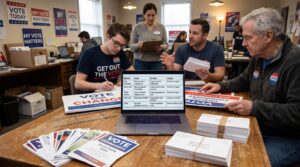
Instead of looking at just the costs, you can evaluate campaign materials by looking at three things: reach, precision, and lifespan. Reach shows how many voters a format can connect with, precision shows how well it targets a specific group, and lifespan is about how long the message stays visible or useful.
For example, direct mail lets you target voters more precisely, yard signs keep your message visible in important spots, and flyers help you connect with people directly when canvassing. Each one has its own role in your campaign.
Here is a good sample for other materials:
| Material | Reach | Precision | Lifespan |
|---|---|---|---|
| Bulk postcards | Reaches broad voter groups | Targets selected mailing lists | Short-term impact |
| Direct mail | Reaches targeted households | Targets specific voter segments | Short-term impact |
| EDDM mailers | Covers selected neighborhoods | Targets by geographic area | Short-term impact |
| Yard signs | Builds local visibility | Targets high-traffic locations | Long-term visibility |
| Flyers | Varies by distribution method | Targets canvassed areas | Short- to mid-term use |
By comparing your print materials using these factors, you can figure out which one best supports your outreach goals and helps you use your budget wisely.
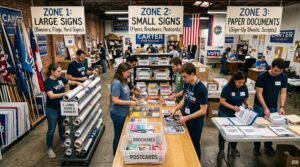
How much you spend on campaign printing depends on the race, where you are, your outreach plan, and your budget. Rather than picking a set amount for printing, organize spending based on what each material is meant to do. This way, you can adjust your budget more easily as your campaign changes.
A flexible budget helps campaigns put money where it matters most and make the most of limited resources.
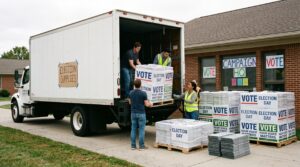
Ordering in bulk is often seen as a good move for campaigns since buying more usually lowers the cost per item. The important thing is to know what the campaign will actually need.
High-predictability materials, such as core yard signs or evergreen flyers, are good to order in larger amounts because their demand and message usually stay the same.
For low-predictability materials linked to events, endorsements, or changing issues, it’s better to order smaller batches. Think about both the cost per item and how relevant the material will be. Only order as much as the campaign is sure to use.
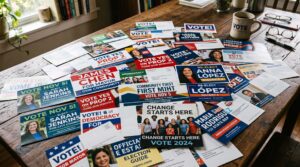
Mailing is another affordable way to reach more people during an election. The USPS can send out postcards, flyers, and brochures for you, helping your campaign get noticed without spending much. When planning direct mail, begin by thinking about your audience instead of the mailer. Decide first if your campaign needs to target individual voters or reach a wider area.
Targeted direct mail uses a specific voter list, so you can control who gets each message. Bulk postcards are a good option for sending short messages to bigger targeted groups.
Every Door Direct Mail, or EDDM, is based on geography. It sends mail to all households along chosen USPS carrier routes, not to specific voters, so it works well for raising awareness in a whole neighborhood.
Pick your mailing method based on how targeted your campaign needs to be, then choose the format and how many pieces to send. If you use EDDM, make sure to review the latest USPS rules, requirements, and prices before you order.
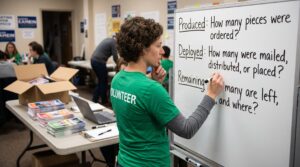
Once you have your print plans set, simple inventory tracking can help keep spending on track. A shared spreadsheet is often enough for local and regional campaigns. For each major material, track:
These numbers show whether orders match actual campaign activity. Regular inventory checks also help multi-location campaigns redistribute available materials before spending money on additional production.
What is the most cost-effective campaign advertising?
The most cost-effective option reaches the right voters with the least waste. Targeted direct mail works well for defined voter groups, while EDDM, flyers, and yard signs are more practical for broad geographic reach, field outreach, or ongoing visibility.
How much should a campaign spend on printed materials?
There is no standard percentage that exists for campaign spending on printed materials. Instead, set the budget based on voter contact, visibility, field needs, and contingency funds, then adjust spending as priorities change.
Are yard signs worth the investment?
Yes, when they support a clear visibility strategy and are placed where the intended audience can see them. Focus on strategic coverage rather than distributing as many signs as possible.
How can campaigns lower printing costs?
Campaigns can lower costs by ordering predictable materials in bulk, phasing materials likely to change, and avoiding unnecessary reprints. Planning quantities based on actual mailing and field activity can also reduce unused inventory.
Making the most of your campaign materials budget isn’t just about saving money. It’s about spending wisely. Choose each material for a specific communication goal, order only what you’ll really use, and plan production alongside your mailing and field work.
Bulk postcards, direct mail pieces, EDDM mailers, yard signs, and flyers all help with voter outreach if you match their quantity, timing, and distribution to what your campaign really needs.
Also, ask yourself before approving the next order: What is this for? Who needs to see it? How certain is the demand? What do we already have?
These questions help your campaign keep spending in check, cut down on waste, and save money for the outreach that matters most.
PrintPlace’s mission is to provide customers with unparalleled printing services through the knowledge and expertise of its employees.