
Give us a call M-F (6am-10pm CT), Sat-Sun (8am-7pm CT)

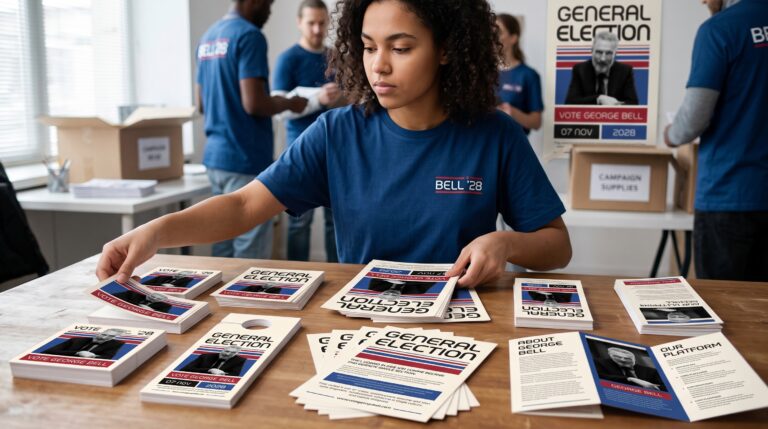
Election campaigns depend on dedicated, well-prepared volunteers. While managers and committees usually assign tasks, you can also create a voter outreach program run entirely by volunteers. If you set clear goals, prepare materials, and give simple instructions, your volunteers can handle election promotions and make it easy for you to track what happens in the field.
You can organize the process into four steps:
In this article, we’ll show you how to prepare the volunteers and give them the right materials so they can reach more people and help your candidate get noticed.
The main thing is to keep three parts working together: volunteer preparation, campaign materials, and field operations. This way, everyone knows what to do and when.
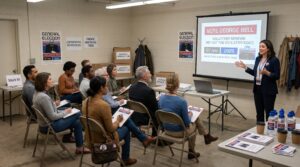
Begin each outreach shift by making sure volunteers know exactly what they need to achieve.
Each shift can have a different focus, like introducing the candidate, talking about an issue, inviting people to an event, finding supporters, or sharing election details. Once you know the goal, you can plan the rest of the assignment around it.
For example, here’s how you might organize a canvass to introduce the candidate:
| Part of the Assignment | What Volunteers Need |
|---|---|
| Objective | Introducing the candidate and providing a call-to-action: “go out and vote!” |
| Audience | Voters in assigned neighborhoods. The best to reach out to are ones still undecided. |
| Main message | Introducing the candidate this election and revealing their key priorities. |
| Primary material | Walk cards, election flyers, and brochures. |
| No-contact procedure | Follow the campaign’s approved procedure. |
| Follow-up | Record the results, primarily audience reaction. Also, answer any questions and requests. |

This approach helps the campaign put together a useful field kit for each volunteer.
For this shift, volunteers might get voter or turf details, short talking points, walk cards, approved materials for no-contact situations, instructions for reporting, and campaign contact info. Brochures can also be given to voters who want more information.
What you include should match the assignment. For example, only add an event flyer if the event is part of the outreach.
The same idea works for training. Instead of going over every possible situation, focus on the ones volunteers are most likely to face.
| When This Happens | Volunteer Action |
|---|---|
| Voter answers | Use the assigned talking points, provide the designated material, and record the result |
| Nobody answers | Follow the approved no-contact procedure and record the attempt |
| Voter wants more information | Provide the approved resource or explain where more information is available |
| Volunteer doesn’t know an answer | Use the campaign’s approved information or follow-up process rather than guessing |
| Voter requests a yard sign | Record the request through the campaign’s sign-request process |
| Voter doesn’t want to engage | Politely end the interaction and record the appropriate result |
Before volunteers head out, give a quick briefing to review everything. Make sure they know where they’re going, the goal of the outreach, the main message, what materials they have, and how to report their results.
That creates a straightforward field workflow:
Assignment → Conversation → Material → Result → Follow-Up

Once volunteers have their assignments, gather and prepare the campaign materials they’ll need for their goals. Each volunteer should get only the materials that match their outreach.
Similarly, each printed material has its own purpose in outreach. Make sure to explain these to every volunteer, so everyone is on the same page:
Build each field kit to match the assignment. For example:

Speaking of campaign materials, make sure everything looks consistent and clearly part of the same campaign. Set up a group of approved elements that staff can use again, such as:
Apply this approach to messaging too. Store approved descriptions of the candidate, priorities, events, and election details in one spot. This way, staff can make new materials easily without having to start over each time.

Also, always be ready for last-minute prints and quick changes. Keep all your digital assets together in one file so you can print something out quickly if needed.
Add a label version to each item so staff can easily spot the most up-to-date approved material. For example:
After a new version is approved, set it as the active version and remove any old copies from the field inventory.
Once you’ve assigned volunteers and collected your materials, set up an outreach calendar. This will help you plan your inventory and ensure each shift has everything it needs.
Start by listing all your planned activities. Next, estimate the materials you’ll need by considering the number of volunteers and the type of outreach you’re organizing.
For example, if your campaign has canvassing on the weekend, a community event on Tuesday, and neighborhood outreach on Thursday, each activity will need a different mix and number of materials.
Try to keep your plan simple and direct:
Upcoming outreach → Volunteer count → Expected material use → Inventory check → Restock
For materials you use frequently, set a minimum stock level based on how much you typically need and how long printing takes. For example:
If a weekend canvass typically uses 1,500 walk cards, reorder in advance so you’re ready for the next shifts.
You should also include a basic inventory tracker in your plans. These can often show what’s available and what needs attention. For each material, record:
A simple inventory tracker can look something similar to this:
| Material | Version | On Hand | Next Use | Expected Need | Action |
|---|---|---|---|---|---|
| General walk card | V3 | 2,400 | Weekend canvass | 1,800 | Ready |
| Door hanger | V2 | 650 | Weekend canvass | 900 | Restock |
| Event flyer | V2 | 1,100 | Tuesday event | 500 | Ready |
| Candidate brochure | V4 | 180 | Ongoing | 150 | Monitor |
| Yard sign | Current | 75 | Supporter requests | Varies | Monitor |
Always update the tracker as materials are packed, returned, or reordered. You should also include this in your consolidated file so the staff can quickly see whether upcoming outreach is properly supplied.
In addition to the recorded materials, you may get voter requests after outreach. Make it easy for volunteers to note these requests, but do not make them responsible for handling them. Instead, create a process that can be shared with your other teams.
For example, a request for a yard sign can go through this process:
Request recorded → Assigned to staff → Fulfilled → Closed
Follow the same steps for requests for more information or campaign follow-up. This way, volunteers can focus on outreach, and requests will reach the right team.
After each outreach shift, gather feedback to help make future campaign events better. Along with voter-contact results, check the following:
Make changes based on what you find. Bring more of the materials that ran out, pack fewer items that weren’t used, and cover common voter questions in the next briefing.
Over time, this process creates a simple routine:
Plan → Prepare → Deploy → Record → Review → Adjust
A strong voter outreach program depends on keeping volunteers, campaign materials, and field operations connected. Begin by giving clear assignments, making sure volunteers have the tools and instructions they need, and keeping materials up to date for the next shift. After each outreach, record what happened, follow up as needed, and use field feedback to improve next time.
The complete workflow is simple: Define the outreach → Prepare volunteers and materials → Run the shift → Record results → Follow up → Improve the next shift
When you use a repeatable system, your campaign stays organized, and every volunteer shift becomes easier to handle.

PrintPlace’s mission is to provide customers with unparalleled printing services through the knowledge and expertise of its employees.