
Key Takeaways: What to Include in Your Event Printing Budget
When budgeting for event signs, banners, handouts, and other printed materials, think beyond the production costs. Account for shipping, display hardware, installation, and other related expenses.
Keep estimated costs separate from confirmed quotes and record each quote’s specifications and date.
Track every item’s purpose, specifications, quantity, cost, its designated approver, and unresolved details.
Create a contingency plan for uncertain attendance, late sponsor artwork, or other changes.
An event printing budget covers more than the cost of paper and ink. It should account for the materials you need, the quantities required, and the expenses involved in preparing, shipping, and setting them up.
This guide will help you plan your budget, compare costs, and prepare your event materials with greater confidence.
1. Prioritize essential materials first.
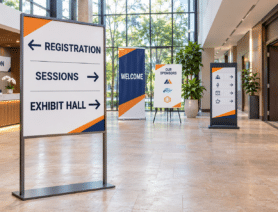
Start with materials attendees need, such as registration signs, room signs, directions, and schedules. Review the venue’s existing signs to avoid producing duplicates.
Next, budget for required sponsor materials and confirm their specifications and placement.
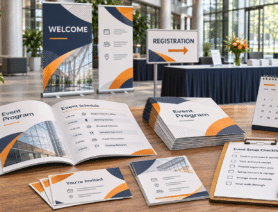
Then evaluate optional items, such as handouts and photo backdrops, based on their purpose, location, and intended users.
Use this Event Printing Checklist to catch missing items. If requests exceed your budget, prioritize materials that support navigation and participation over optional extras.
2. Estimate print quantities.
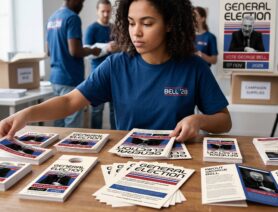
Different materials require different quantity estimates. For program handouts, decide whether to give one to each attendee or place shared copies at pickup points. Include staff and other recipients and consider how a digital version may affect demand.
For conference signs, map the attendee journey and count the locations where attendees need directions, confirmation, or information. Consider different approaches to each location before deciding how many signs you need.
Document the reason for ordering extras, whether to cover uncertain attendance or allow for restocking.
3. Consider the factors affecting the cost of printing.
Several factors can change the cost of your event printing:
- Size: Larger materials generally require more paper, ink, or substrate.
- Material: Paper type, board, vinyl, fabric, and other materials have different prices.
- Quantity: Larger orders may lower the cost per piece but increase your total spending.
- Page count: Longer programs and booklets require more paper and production time.
- Finishing: Binding, folding, coating, cutting, and other finishes can add to the cost.
- Display hardware: Stands, easels, mounting supplies, and other supports are also signage expenses.
- Production and delivery: Rush production, shipping, taxes, and venue handling fees can raise the final cost.
Compare options by changing one factor at a time. Also consider how each material will be used so you can choose the most cost-effective option for your event.
4. Budget for sponsor materials and commitments.
Turn each sponsor commitment into a specific printed item and placement. A logo in a program, a registration banner, and a sponsor board are separate deliverables with their own costs, specifications, and approval requirements.
For each item, record:
- Sponsor name
- Printed material
- Quantity and specifications
- Placement
- Approved artwork
- Approval owner
- Logo size or positioning requirements
Identify shared materials, such as a recognition board featuring multiple sponsors, and budget for dedicated placements separately.
Review sponsor artwork early to resolve missing files or unclear instructions. If a sponsor requests changes, check which materials are affected and update the estimate.
After setup, document completed placements with photos and keep a copy of printed materials, such as the event program.
5. Decide what to reuse and what to update.
Reusable materials with evergreen designs can lower future printing costs, as long as they remain accurate and in good condition.
General branding may work across multiple events, but dates, venue names, schedules, and sponsor details often change. Keep changing information off materials you plan to reuse.
Before reusing an item, confirm that:
- The artwork is still accurate
- The material is clean and presentable
- The hardware and mounting parts are complete
- Storage and transport are practical
When buying new materials, consider how often they will be used and who will manage them between events. A reusable display is only valuable if the team can find it and update it when needed.
After the event, record what was kept, where it is stored, and whether it needs repairs or replacement parts.
Reusable materials can reduce the amount you need to order for future events, provided their content and condition remain suitable.
6. Check your budget before ordering.
Compare your budget with the print inventory and signage plan. Each item should have an approved purpose, quantity, specifications, and final artwork.
Before placing the order:
- Confirm that quotes match the products you plan to buy.
- Include hardware, shipping, taxes, and venue fees.
- Make sure delivery fits the venue’s receiving process and setup schedule.
- Resolve open details, such as page counts, sign sizes, and pending approvals.
- Assign someone to handle each outstanding decision.
After ordering, record the actual costs so your budget reflects committed spending.
Frequently Asked Questions
There’s no standard amount for every conference. Base your estimate on the venue layout, attendee distribution plan, program content, sponsor commitments, specifications, and delivery deadline. Use current quotes for the products you need.
Estimate the number of copies for attendees, staff, speakers, and other recipients. Add a reasonable reserve based on expected attendance and how the programs will be distributed.
You can reuse materials with current branding and information if they’re still in good condition. Inspect the graphics, displays, and hardware before including them in your plan.
Match each sponsor commitment to a specific printed item and placement. Include design, production, hardware, shipping, and other related costs. For shared displays, confirm the total quantity and costs to avoid double-counting.
Build a Smarter Event Printing Budget
A clear event printing budget helps you order the right materials, control costs, and avoid last-minute surprises. Account for every expense, prioritize essential items, estimate quantities carefully, and decide which materials can be reused.
Check out PrintPlace's custom booklets, banners, and other signage options. You can use our Event Printing Checklist to make sure you don't miss anything.